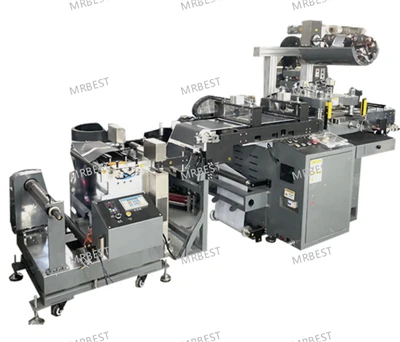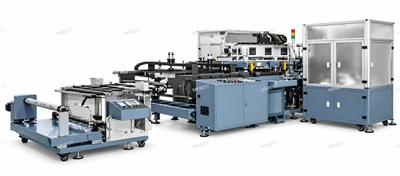
Shenzhen Meirui Zhida Technology Co., Ltd. is one of the leading manufacturers and suppliers of battery electrode laser die-cutting machine in China, featured by quality products and low price. Welcome to buy bulk battery electrode laser die-cutting machine made in China here from our factory. If you have any enquiry about pricelist and quotation, please feel free to email us.
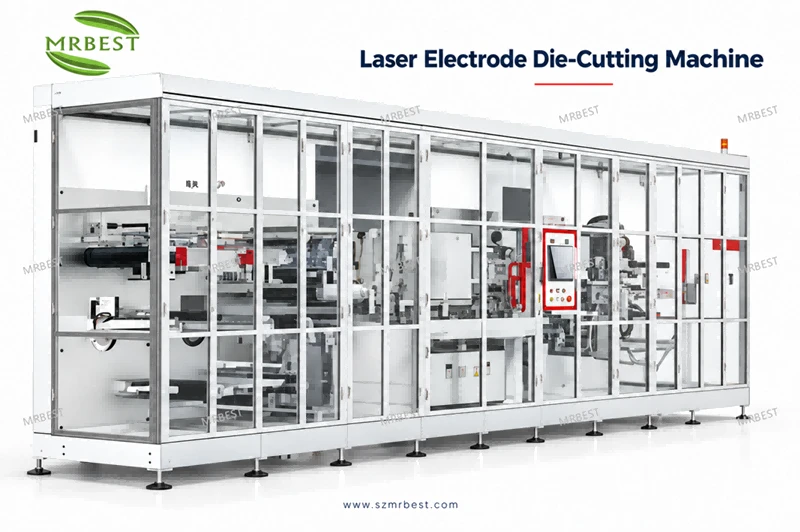
Laser Electrode Die-Cutting Machine for Pouch Cell Manufacturing
MOdell:MR-LC200A
The MRBEST MR-LC200A is a laser electrode die-cutting machine for preparing individual electrode sheets used in pouch lithium-ion battery manufacturing.
Designed for slit, continuously coated electrode rolls with tabs on one side, the machine combines laser tab cutting with metal-die sheet cutting. It integrates automatic unwinding, web guiding, tension control, dust removal, CCD inspection, defective-sheet rejection, and finished-sheet tray collection.
Supported electrode materials include NCM, LMO, LFP, graphite, and hard carbon. Compatible current collectors include aluminum foil, carbon-coated aluminum foil, and copper foil.
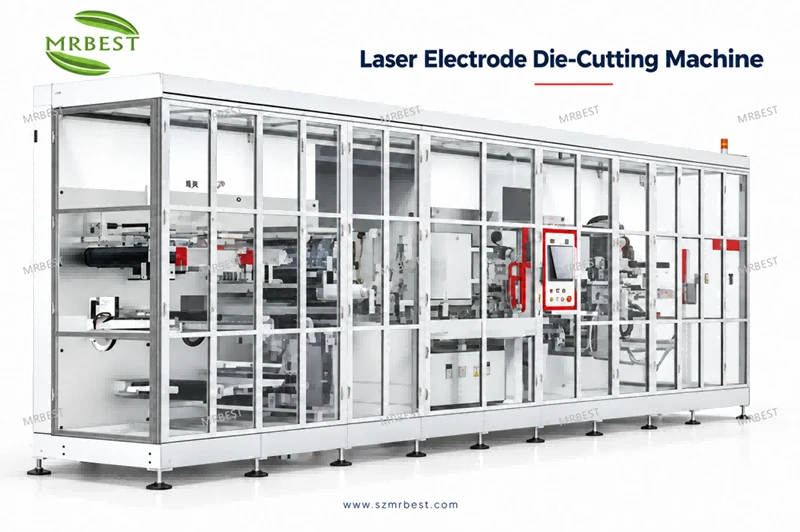
How Does the MR-LC200A Work?
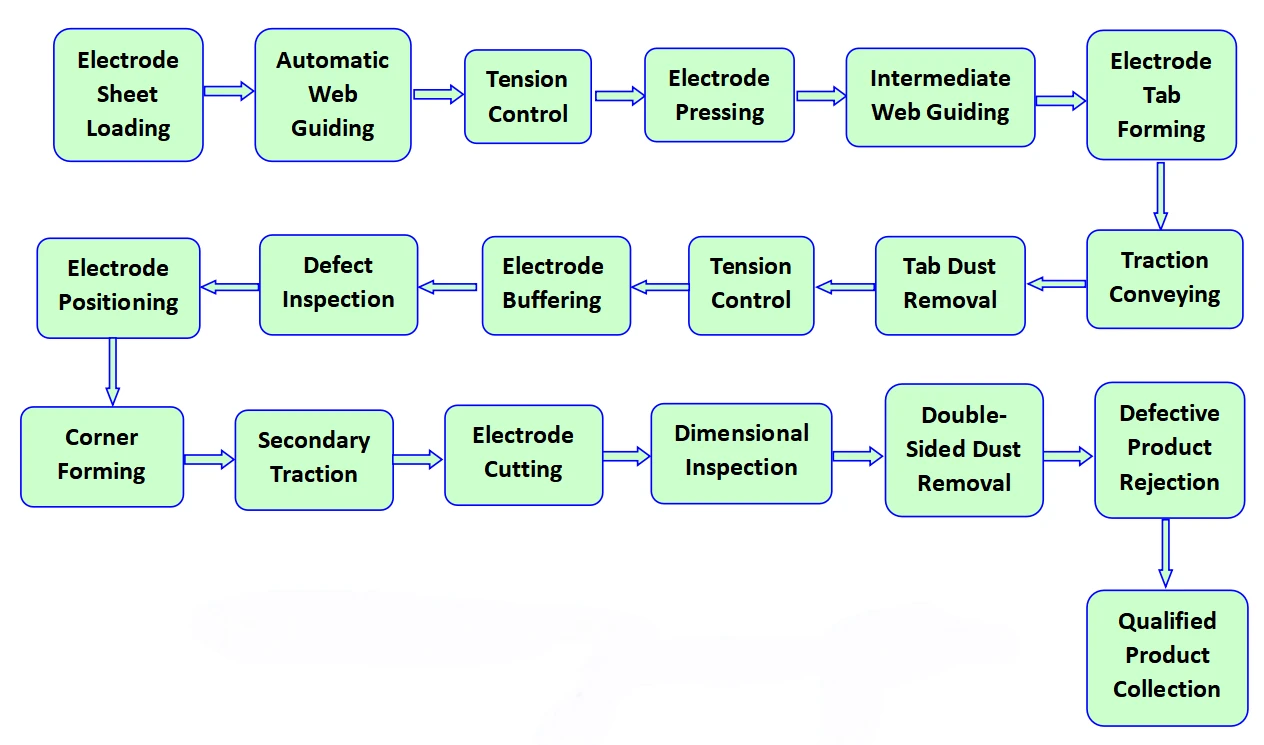
The operator loads an electrode roll onto the air-expanding shaft. The machine then automatically unwinds and guides the material under controlled tension.
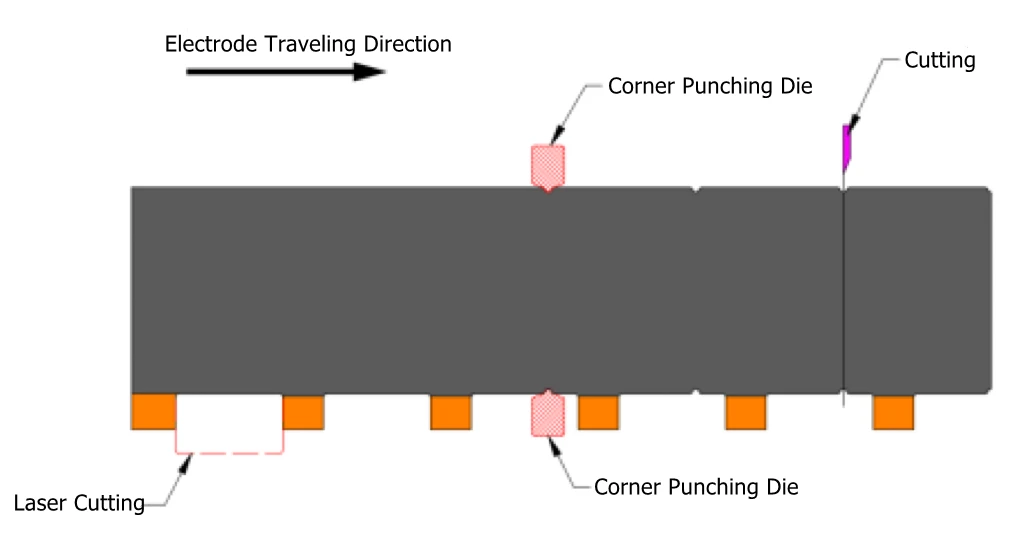
Laser cutting forms the electrode tabs. The material passes through dust removal, buffering, inspection of both surfaces, and corner punching before a metal die cuts it into individual electrode sheets.
Vacuum conveyor belts transport the cut sheets for CCD dimensional inspection and surface cleaning. Defective sheets are rejected into NG trays, while qualified sheets are collected into finished-product trays.
Process flow
Roll loading → Automatic unwinding and web guiding → Tension control → Laser tab cutting → Tab dust removal → Buffering → Double-sided defect inspection → Corner punching → Metal-die sheet cutting → Vacuum conveying → Dimensional inspection and surface cleaning → NG rejection / OK tray collection
Key Technical Specifications
| Parameter | Specification |
|---|---|
| Model | MR-LC200A |
| Application | Electrode sheet preparation for pouch lithium-ion batteries |
| Input material | Slit, continuously coated electrode rolls with single-side tabs |
| Tab forming method | Laser cutting |
| Sheet cutting method | Metal-die cutting |
| Production efficiency | ≥150 electrode sheets/min |
| Incoming coating width | 100–200 mm |
| Finished electrode width, W | 50–100 mm |
| Finished electrode length, L | 100–200 mm |
| W and L dimensional tolerance | ±0.2 mm |
| Maximum input roll diameter | Ø650 mm |
| Roll core inner diameter | Ø76.2 mm / 3 inches |
| CCD dimensional inspection accuracy | ≤±0.1 mm |
| Tray collection accuracy | ≤±0.5 mm |
| Equipment-related yield | ≥99.5% |
| Downtime ratio | ≤2%, calculated as defined below |
| Control system | PLC-based bus control with touchscreen and push buttons |
| Safety protection | Safety enclosure with door interlocks |
| Overall dimensions (W × L × H) | 2,000 × 7,000 × 2,600 mm |
| Dust collector dimensions (L × W × H) | 1,300 × 1,000 × 2,600 mm |
Note: Overall machine dimensions are subject to the final design. Production performance must be evaluated under the agreed material and operating conditions.
Incoming Electrode Material Requirements
| Parameter | Specification |
|---|---|
| Material form | Slit, continuously coated electrode roll, single-side tab |
| Electrode materials | NCM / LMO / LFP / Graphite / Hard carbon, etc. |
| Current collector | Aluminum foil / Carbon-coated aluminum foil / Copper foil |
| Roll outer diameter | ≤Ø650 mm |
| Roll core inner diameter | Ø76.2 mm |
| Coating width | 100–200 mm |
| Foil margin width | 10–20 mm |
| Cathode foil thickness | 10–25 μm |
| Anode foil thickness | 6–15 μm |
| Cathode electrode thickness | 120–300 μm |
| Anode electrode thickness | 80–150 μm |
| Roll winding alignment deviation | ≤±2 mm |
| Electrode camber | ≤2 mm/m |
| Wavy-edge height difference | ≤2 mm |
| Coating width tolerance | ≤±0.5 mm |
| Coating alignment deviation | ≤±0.2 mm |
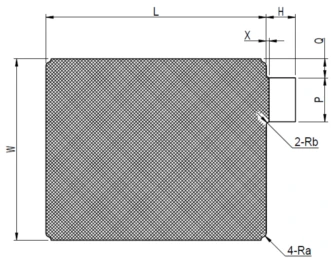
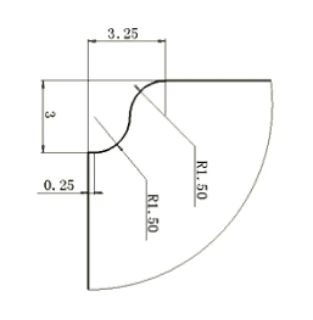
Finished Electrode Dimensions
Dimension symbols correspond to the electrode drawing and should be read together with that drawing.
| Dimension | Range (mm) | Tolerance (mm) |
|---|---|---|
| W | 50–100 | ±0.2 |
| L | 100–200 | ±0.2 |
| H | 10–20 | Not specified |
| Q | 10–20 | ±0.2 |
| P | 10–30 | ±0.2 |
| X | 0–2 | Not specified |
| RA | Refer to electrode drawing | Not specified |
| RB | 2–5 | Not specified |
Cutting Quality and Inspection Specifications
| Parameter | Specification |
|---|---|
| Laser-cut burrs in coated regions | Transverse ≤20 μm; longitudinal ≤0 μm |
| Laser-cut burrs in bare foil regions | Transverse ≤20 μm; longitudinal ≤12 μm |
| Heat-affected zone - cathode | ≤100 μm; specified reference: AT9 on aluminum foil |
| Heat-affected zone - anode | ≤100 μm; graphite on copper foil |
| Molten bead and dust particle diameter | ≤20 μm; no droplet-shaped molten beads |
| Exposed metal at anode coating edges | <50 μm |
| Metal exposure width associated with adhesive overflow on cathode tabs | <50 μm |
| Electrode sheet cutting burrs | Va ≤12 μm; Vb ≤12 μm beyond the foil area |
| CCD false rejection rate | ≤0.5% |
| CCD missed detection rate | 0, as specified in the technical agreement |
| CCD dimensional inspection accuracy | ≤±0.1 mm |
| Finished-sheet tray collection accuracy | ≤±0.5 mm |
Inspection definitions:
False rejection rate: Qualified electrodes incorrectly classified as NG, divided by total production.
Missed detection rate: NG electrodes incorrectly classified as qualified, divided by total production.
Equipment-related yield: Excludes defects already present in incoming materials.
Burr directions, Va/Vb, and edge-quality measurements should follow the agreed inspection drawings and acceptance methods.
Cutting Die Service Life
| Parameter | Specification |
|---|---|
| Cathode cutting cycles after each regrinding | ≥1,000,000 cycles |
| Anode cutting cycles after each regrinding | ≥1,000,000 cycles |
| Number of die regrinding operations | More than 10 |
Equipment Functional Modules
| Module | Qty. | Function |
|---|---|---|
| Machine frame | 1 | Structural support and installation reference |
| Unwinding module | 1 | Air-shaft roll mounting, servo unwinding, web guiding, and tension control |
| Process web guiding module | 1 | Electrode alignment during conveying |
| Anode tab rib pressing module | 1 | Presses reinforcing ribs to help prevent tab folding |
| Laser tab forming module | 1 | Cuts and forms electrode tabs |
| Feeding modules | 2 | Dual-roller traction feeding |
| Tab dust removal modules | 2 | High-speed air-knife cleaning |
| Buffering module | 1 | Buffers material between feeding modules |
| CCD surface defect inspection modules | 2 | Inspect both electrode surfaces |
| Corner forming modules | 2 | Punch inner rounded corners |
| Metal-die cutting module | 1 | Cuts individual electrode sheets |
| CCD dimensional inspection module | 1 | Checks electrode outline dimensions |
| Surface dust removal modules | 2 | Clean both electrode surfaces |
| Vacuum conveying modules | 2 | Transport cut electrode sheets |
| NG rejection modules | 2 | Reject defective electrodes into NG trays |
| Unloading module | 1 | Collects qualified electrodes into OK trays |
| Safety enclosure | 1 | Provides a semi-enclosed working area with door interlocks |
| Control system | 1 | PLC-based bus control with touchscreen and push buttons |
Frequently Asked Questions
1. Is the entire electrode outline cut by laser?
No. The MR-LC200A uses laser cutting to form electrode tabs, corner punching dies to form inner rounded corners, and a metal die to cut individual electrode sheets.
2. What electrode materials can the machine process?
The specified materials include NCM, LMO, LFP, graphite, and hard carbon on aluminum, carbon-coated aluminum, or copper foil. Material suitability should be confirmed against the incoming material requirements.
3. What is the electrode size range?
The specified finished-sheet range is 50–100 mm in width and 100–200 mm in length. Tab and corner dimensions must follow the electrode drawing.
4. Does the machine inspect both electrode surfaces?
Yes. Two CCD defect inspection modules inspect the front and back surfaces. A separate CCD module checks the dimensions of the cut sheets.
5. How are defective electrode sheets handled?
The machine automatically rejects defective sheets into NG trays and collects qualified sheets into finished-product trays.
Discuss Your Electrode Cutting Requirements
Contact MRBEST with your electrode drawing, material specifications, and required output to discuss the MR-LC200A configuration.
Website: https://www.szmrbest.com
MRBEST - Make Your Battery Research & Manufacturing Easier!
Hot Tags: battery electrode laser die-cutting machine, China battery electrode laser die-cutting machine manufacturers, suppliers, factory