


Dry Electrode Process
Dry Electrode Process and Equipment
There are generally two types of dry electrode processes: powder spraying method and binder fiberization method. Among them, the main process of the binder fiberization dry electrode technology involves mixing the binder, active materials, and conductive agents into a powder, which is then processed using a multi-stage calendering machine. The shear force during the differential speed calendering process further fibers the binder and forms a self-supporting membrane, which is then combined with the current collector. This paper primarily discusses the design principles of the dry electrode film-forming calender and the associated process from a theoretical perspective.
Contents
1. Advantages of the Dry Electrode Process
2. Applications of the Dry Electrode Process
3. Equipment Workflow
Advantages of the Dry Electrode Process

Comparison Between Dry and Wet Electrode Processes

Dry Electrode Process Application


Equipment Workflow
Mixing Machine
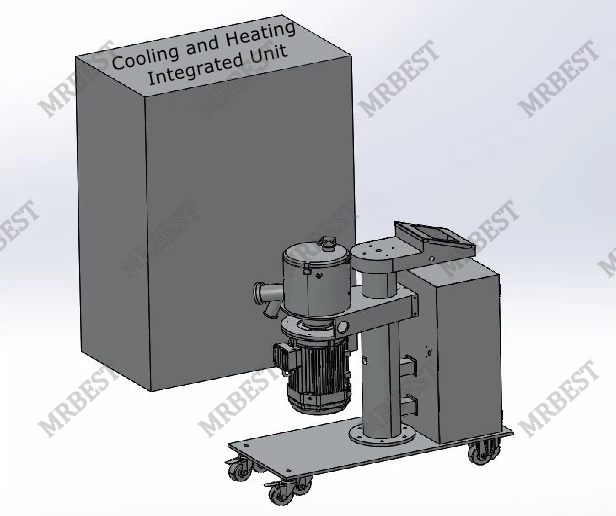
| No. | Item | Technical Specificatons |
| 1 | Capacity | 10L |
| 2 | Dimension | 1200*500*1180 |
| 3 | Weight | 50Kg |
| 4 | Power | about 5.5KW |
| 5 | Lifting Method | Lifting of the Mixing and Stirring Unit |
| 6 | Surface Treatment | Material-contact parts made of SUS304; all other parts made of Q235-A |
| 7 | Sealing Requirements | Silicone Rubber / FKM (Fluororubber) |
| 8 | Control Method | PLC + Touch Screen |
| 9 | Heat Preservation Method | 5 HP Heating and Cooling Integrated Unit |
Battery Calendering Machine
Features:
* Material Input State: Granular Material
* Film Width: 350mm
* Closed-loop control of roller gap and film thickness is available
* Film Tension: >5N
* Rollers are independently driven, with independent control of speed and pressure.

| No. | Item | Technical Specificatons |
| 1 | Mechanical Speed | Max:10m/min |
| 2 | Roller Diameter | 250mm~360mm |
| 3 | Roller Width | Max:500mm |
| 4 | Film Thickness | ≤80-100μm |
| 5 | Precision | ±2μm |
| 6 | Temperature Control Accuracy | ±1℃ |
| 7 | Gap Adjustment Accuracy | 1μm |
| 8 | Roller Pressure | ≥1.5T/cm |
Temperature Control System
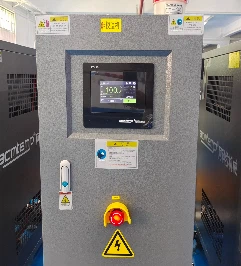
Mold Temperature Controller
The mold temperature controller heats the thermal oil, which is delivered from the oil outlet to heat the roller internally. The oil then returns to the system through a rotary joint and return pipe, creating a continuous cycle to heat the rollers. The operating temperature of the mold temperature controller ranges from 80°C to 160°C, with a maximum heating capacity of 200°C. The surface temperature of the heated roller differs by no more than ±1°C from the digital display temperature of the mold temperature controller. Each roller is equipped with an individual mold temperature controller, allowing independent control of temperatures at different time periods.

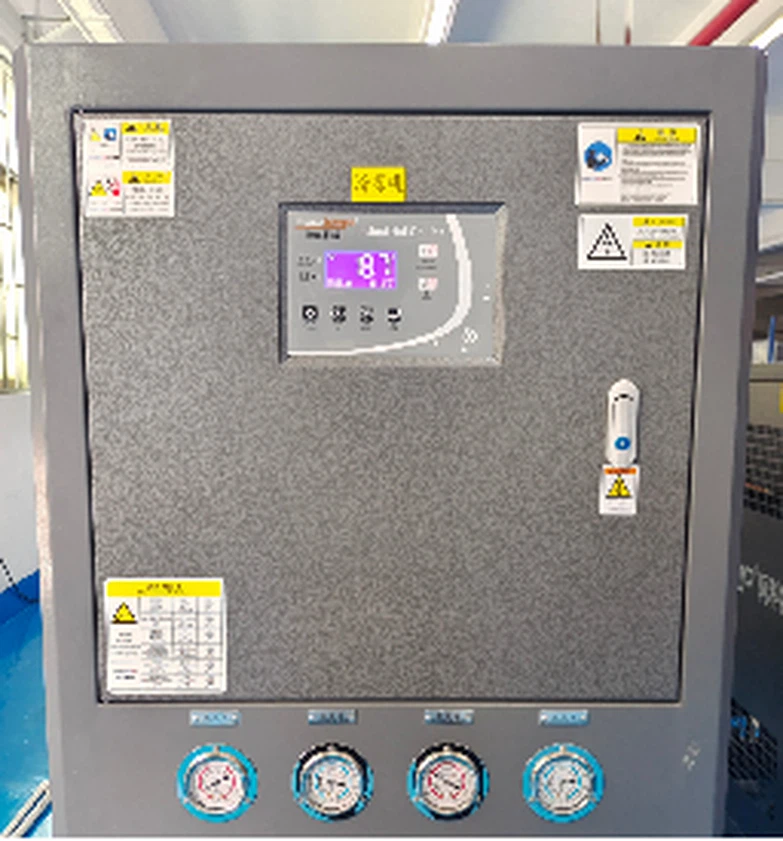
Water Chiller
The chiller is the central component of the entire temperature control system, regulating the lubrication station temperature and cooling the return oil from the mold temperature controller. It protects the rollers and bearings from deformation and jamming caused by high temperatures. The operating cooling temperature is set between 8°C and 25°C, ensuring the normal operation of the entire temperature control system.
Equipment Description
Gap Adjustment Mechanism and Drive Base
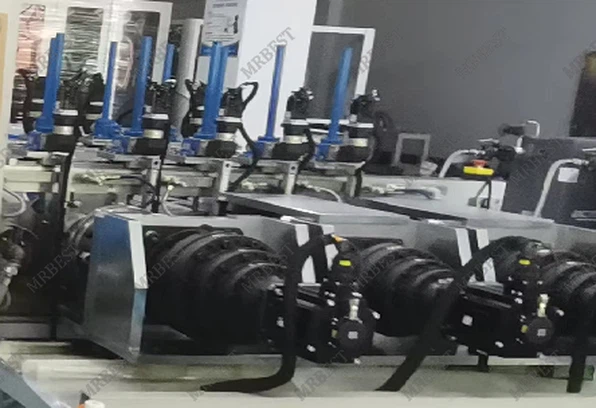
The distance adjustment mechanism consists of fixed and moving trapezoidal blocks, a lift, a planetary gearbox, and a servo motor. It controls the gap size between rollers, which determines the thickness and surface density of the electrode sheets. The gap adjustment accuracy can reach 1 μm. The drive base is the power system that drives the rollers, consisting of a transmission frame, linear guides, a servo motor, a precision planetary gearbox, and a high-rigidity coupling. The servo motor drives the gearbox, which outputs torque through the coupling to rotate the rollers for calendering operations. The torque and speed output by the servo motor and gearbox determine the shaping and production speed of the electrode sheets.
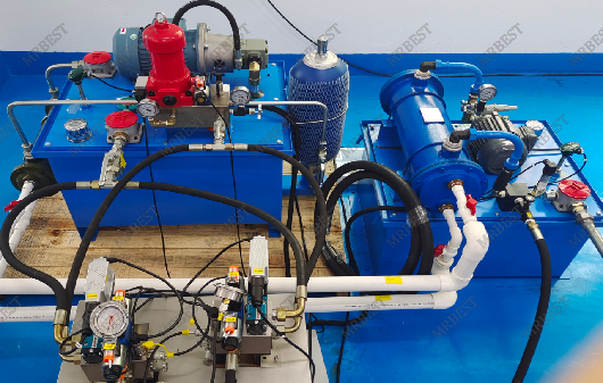
Hydraulic Station and Lubrication Station
The hydraulic station controls the servo cylinder, which drives the rollers for the compression operation. The lubrication station provides lubrication and cooling to the bearing housing, protecting the internal bearings from deformation and preventing jamming.
Floor Layout Diagram
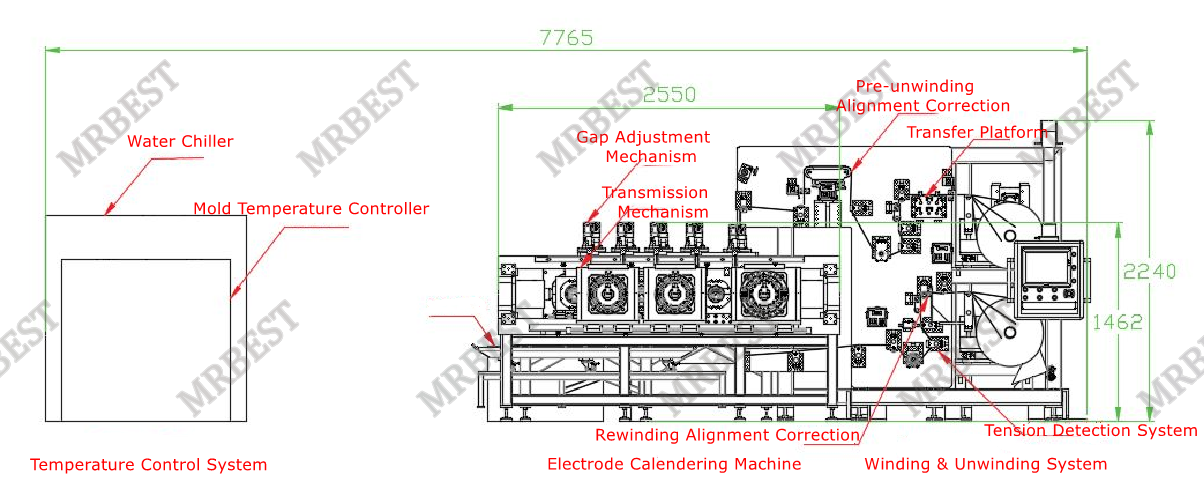
Process Introduction
Equipment Overview:
The calendering mechanism is used to achieve powder film formation, film thinning, tension control, alignment correction, and winding operations.
Equipment Features:
* The powder is evenly distributed across the entire width, and a uniform feeding mechanism is installed at the roller gap to effectively control the uniform entry of powder into the rollers.
* The front, middle, and rear sections of the calendering machine are equipped with cutting mechanisms to trim the edges and prevent tearing at the edges.
* Tension rollers and servo motors are installed between the calendering machines to effectively control tension.
* The unwinding and rewinding mechanism is an integrated system composed of unwinding alignment correction, tension detection, web transfer platform, and rewinding alignment correction.
* The tension can be controlled during both unwinding and rewinding, reducing web breakage.
* The equipment is easy to install and occupies a small footprint.
The equipment includes:
Vibratory feeding mechanism, calendering mechanism, cutting and tension control mechanism, transfer platform, rewinding mechanism, etc.





Product Categories
Latest Products


Shenzhen Meirui Zhida Technology Co., Ltd. is one of the most professional dry electrode process manufacturers and suppliers in China, specialized in providing high quality products with low price. If you're going to buy bulk discount dry electrode process made in China, welcome to get pricelist and quotation from our factory.
Small Mixer Machine, Battery Electrode Paste Viscosity Tester, Lithium Battery Mixer