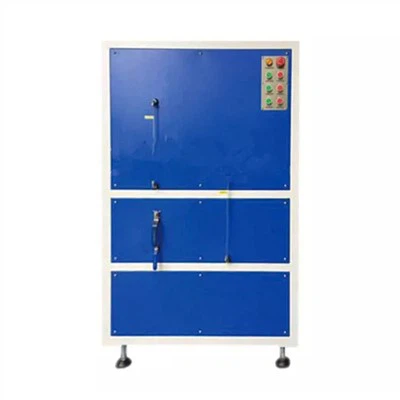
Shenzhen Meirui Zhida Technology Co., Ltd. is one of the leading manufacturers and suppliers of battery electrode coating machine in China, featured by quality products and low price. Welcome to buy bulk battery electrode coating machine made in China here from our factory. If you have any enquiry about pricelist and quotation, please feel free to email us.
lithium ion Battery Electrode Coating Machine With Two Oven for Battery Manufacturing
Battery Electrode Coating Machine is a key equipment used in the production of lithium-ion batteries. It applies a uniform layer of electrode slurry (a mixture of active material, binder, and solvent) onto a metal current collector (such as copper for the anode and aluminum for the cathode). This process is critical for ensuring consistent electrochemical performance and high energy density in the final battery cells.
Lithium Battery Coating Machine is a specialized three-roller transfer coating system designed for research and development applications in the lithium-ion & Soudium ion battery industry. It allows both continuous and intermittent coating, making it versatile for different coating experiments and process optimizations.
Products Description
*Substrate tension control, stable belt, configuration of correcting device;
*Hot air oven, double-sided airing on the top and bottom, good drying effect;
*Three-roll transfer coating with a wide coating window;
*Comma scraper metering, with precision adjustment mechanism, to achieve high coating accuracy;
*PLC control, touch screen operation, easy to use;
*Optional solvent recovery treatment device;
|
No. |
Item |
Technical parameters |
|
1. |
Suitable for System |
Ternary, lithium iron phosphate, lithium cobaltate, lithium manganate, graphite, silicon carbon and other system battery positive and negative electrode coating process |
|
2. |
Coating Type |
Continuous and Intermittent Coating |
|
3. |
Oven Section Number |
1 section 1 meter oven, total 2m |
|
4. |
Coating Speed |
0~0.5m/min |
|
5. |
The Substrate Thickness |
Aluminum foil (Al) : 8 ~ 30um copper foil (Cu) : 8 ~30um |
|
6. |
Design Width of Roll Surface |
330 mm |
|
7. |
Ensure Coating Width |
within 280mm |
|
8. |
Coating Roller, Cots |
Φ120mm |
|
9. |
Presser Roller |
Φ80mm |
|
10. |
Precision Coating |
±3um |
|
11. |
Weight Precision(mg/cm2) |
Coating center value±1.0% |
|
12. |
Suitable for Paste Viscosity |
2000~12000 (mPas) |
|
13. |
One Side Dry Coating Thickness Range |
20-200μm |
|
14. |
The Solvent Properties |
Oily solvent NMP (s.g=1.033,b.p=204℃) |
|
Aqueous solvent H2O/NMP(s.g=1.000,b.p=100℃) |
||
|
15. |
Suitable for Solid Content Range |
20~85% |
|
16. |
Coating Size Accuracy(mm) |
L≤±1 ,W≤±0.5 |
|
17. |
Precision of Front and Back Alignment (mm) |
L≤±1 ,W≤±0.5 |
Integral Unwinding, Head Mechanism
|
NO. |
Iten |
Technical parameters |
|
1. |
Roller Mounting Structure |
Install the steel frame firmly |
|
2. |
Roll Surface Treatment |
Metal aluminum roll surface oxidation |
|
3. |
Tension Control System |
Automatic control constant tension, tension range 0~50N, servo motor control |
|
4. |
Rectify Way |
Automatic EPC control, stroke 50mm |
|
5. |
Winding Mode |
The material coil is fixed with 3-inch air expansion shaft and air expansion shaft; |
|
Single air expansion axis for unwinding |
||
|
6. |
Maximum Unwinding Diameter |
Ф250mm |
|
7. |
Maximum Load Bearing of Gas Expansion Axis |
80Kg |
|
8. |
Air-expanding Shafts Quantity |
1 |
|
9 |
Main Drive Motor |
Servo motor |
|
10 |
Roll Surface Treatment |
Metal aluminum roll surface oxidation |
|
11 |
Doctor Blade |
Double-sided comma doctor blade |
|
12 |
Coating Roller (Steel Roller) |
Hard chrome plating |
|
13 |
Back Roller (Rubber Roller) |
The surface is covered with imported epdm |
|
14 |
Adjust Blade Clearance Height |
Manual setting |
|
15 |
Single Head Position |
Installation and operation before drying path |
Winding Mechanism: it has the same function as unwinding, as follows
|
No. |
Item |
Technical parameters |
|
1. |
Rectifying Marching |
Installation of drying outlet |
|
2. |
Tension |
Automatic control of constant tension |
|
3. |
Installation Structure |
Install the steel frame firmly |
|
4. |
Winding Gas Expansion Axis Quantity |
One-armed winding |
Oven
|
No. |
Item |
Technical parameters |
|
1. |
Oven Structure |
Double layer independent heating, upper and lower arrangement |
|
2. |
Oven Length |
1m/section, total 2m |
|
3. |
Material |
SUS304 stainless steel |
|
4. |
Temperature Control |
Divided into normal working temperature control, over temperature monitoring and alarm protection control, and cut off the main heating power supply; The paragraphs are completely independent of each other |
|
5. |
Heating Mode |
Electric heating, hot air circulation structure |
|
6. |
Single Section Oven Heating Power |
6KW |
|
7. |
Inside Temperature of Oven |
Design Max. 150℃, single section oven temperature difference ≤±2.5℃ |
|
8. |
Blowing Way |
Upper and lower air blowing, upper and lower air chamber share heating body |
|
9. |
Structure of the Wind |
Special mold is used to cut the air nozzle groove |
|
10. |
Fan Control |
Contactor control |
|
11. |
Heating Control |
Solid-state relay |
|
12. |
The Fan Material |
SUS304 stainless steel |
|
13. |
Solvent Recovery System |
Optional |
Control Dystem
|
No. |
Item |
Technical Parameters |
|
1 |
Master Control System |
Touch screen, PLC, servo system |
|
2 |
Mode of Operation |
Manual, automatic, emergency stop; The whole machine can be operated before and after |
|
3 |
Alarm Condition |
When the device fails, the touch screen will display the corresponding correction screen |
Hardware Accuracy
|
No. |
Item |
Technical Parameters |
|
1. |
Scraper |
Circular jump ≤±1.5um, Ra0.4, straightness ≤±1.5um |
|
2. |
Coating Roller(Steel Roller) |
Circular runout ≤±1.5um, Ra0.4 straightness ≤±1.5um |
|
3. |
Rubber Roller |
Circle runout ≤10um, straightness ≤10um |
|
4. |
Rectifying Deviation |
±0.2mm |
Installation Environment Requirements
1) The ambient temperature of the machine head is 25~30°C, and the rest is 10~40°C;
2) The relative humidity of the machine head is RH ≤ 35%, the negative electrode RH ≤ 98%, and the rest ≤ 98%;
3) Power Supply: 3PH 380V, 50HZ, voltage fluctuation range: +8%~–8%; power supply total power 26KW;
4) Compressed Air: after drying, filtering and voltage regulation: the outlet pressure is greater than 5.0kg/cm2
Products Display


Causes and Preventive Measures for Uneven Coating Thickness in Lithium Battery Coating
The coating process in lithium battery manufacturing is a critical step, as the uniformity of the coating thickness directly affects the battery's capacity, cycle life, and safety. In actual production, issues such as uneven coating thickness (e.g., "thick edges" and "thin edges") are common and pose significant challenges to improving battery performance.
We will analyzes the causes of coating thickness unevenness from multiple aspects, including slurry characteristics, process parameters, equipment precision, and environmental factors, and proposes optimization strategies to address these issues.

Analysis of the main reasons for uneven coating thickness
1. Influence of Slurry Fluid Characteristics
(1) The viscosity, surface tension, and solid content of the slurry are key factors affecting coating uniformity.
(2) Viscosity and Flowability: High-viscosity slurry tends to accumulate locally during the coating process, leading to "thick edges" at the starting and stopping points. When the slurry viscosity is too high, its flowability is restricted.
(3) Surface Tension: Slurries with excessive surface tension are prone to forming "crescent-shaped" thick edges at the coating boundaries, compromising coating uniformity.
(4) Fluctuations in Solid Content: Instability in solid content affects slurry flowability, causing variations in coating thickness. When the solid content deviation exceeds ±0.3%, the uniformity of the coating thickness deteriorates significantly.
2. Improper Process Parameter Settings
| Name | Parameter Setting | Specific impact | Result |
| Coating Speed | Too Fast | The slurry is unevenly distributed on the substrate surface, and the edges fail to spread adequately. | This results in the formation of "thin edges" (edges that are thin and incomplete). |
| Too Slow |
The slurry has an excessively long wetting time at the substrate edges. |
This results in the formation of "thick edges" (where the edges are excessively thick) | |
| Coating Pressure | Uneven pressure |
The slurry excessively spreads at the substrate edges. |
Local thickening (abnormal thickening of the coating in the edge areas). |
| Baking Temperature | Temperature is too high |
The solvent evaporates too quickly, causing surface shrinkage and an imbalance in internal stress. |
Surface cracking, peeling, and a decrease in coating thickness uniformity. |
3. Insufficient Equipment Precision and Stability
(1) Die Design Defects: Deviations in the gap of the slit or unreasonable die exit shape can lead to uneven slurry flow, causing coating thickness variations.
(2) Substrate Tension Control: Fluctuations in substrate tension can cause jittering during the coating process, affecting the uniformity of the coating.
(3) Equipment Wear: Wear on the coating roller or backing roller can alter slurry transfer efficiency, leading to coating thickness fluctuations.
4. Environmental Factors Interference
| Environmental Factors | Specific impact | Consequences for coating uniformity |
| Temperature fluctuations | Environmental temperature changes will change the slurry viscosity | Uneven coating thickness |
| Temperature effects | In high humidity environment, the slurry is easy to absorb water and agglomerate | Affects coating uniformity |
| Particle contamination | Metal shavings or dust in the air can become embedded in the coating | Forming local thickness differences |
Effects of Uneven Coating Thickness
Capacity Decay: Areas that are too thin may result in insufficient active material, affecting the battery's capacity.
Shortened Cycle Life: Thickness differences can cause electrode stress concentration, accelerating material degradation.
Safety Hazards: Areas that are too thick may lead to lithium dendrite growth, increasing the risk of short circuits.
Optimization Strategies
To improve coating thickness uniformity based on the above reasons, the following aspects can be addressed:
| No. | Optimization direction | Specific Measures to Improve Coating Thickness Uniformity |
| 1 | Slurry Property Adjustments |
By adjusting rheological modifiers and surfactants, reduce the slurry viscosity and surface tension. |
| 2 | Process Parameter Refinement |
Adopt dynamic pressure control technology to adjust coating pressure and speed in real-time. |
| 3 | Equipment Precision and Maintenance |
Introduce high-precision die and intelligent correction system to improve coating accuracy. |
| 4 | Environmental Condition Control |
Establish a constant temperature and humidity workshop to reduce the impact of environmental fluctuations on the coating process. |
Conclusion
The solution to the uneven coating thickness problem in lithium battery coating requires multi-dimensional collaborative optimization from slurry characteristics, process parameters, equipment precision, and environmental control. By deeply studying the interactions of these factors and incorporating intelligent technologies to improve production control precision, coating uniformity can be effectively improved, leading to a comprehensive enhancement of lithium battery performance.
Hot Tags: battery electrode coating machine, China battery electrode coating machine manufacturers, suppliers, factory, Battery Electrode Calendering Machine, Slitting Machine, copper foil slitting machine, Laboratory NMP System, Pouch Cell Die Cutting, 3 rollers battery electrode intermittent coating machine