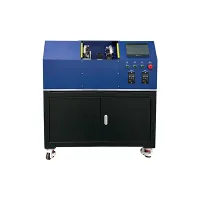
Potential insulation defects in each process of lithium battery cell manufacturing, their causes and solutions.
During the lithium battery cell manufacturing process, insulation defects and foreign matter contamination are key issues affecting battery safety and consistency. The following is a systematic analysis of potential risks in each process from a process perspective, along with targeted solutions:
Electrode Preparation Process
1. Metal Particle Contamination
Types: Metal debris such as Fe, Cu, Al, etc.
Causes:
* Raw materials (for example NCM powder) not undergoing magnetic filtration.
* Abrasion of mixing equipment (for example planetary mixers) generating metal particles.
* Introduction of metal debris from tools during manual operations.
Solutions:
* Use a multi-stage magnetic filtration system (for example rare earth magnetic rods) with a filtration accuracy of up to 5μm.
* Replace slurry-contacting equipment components with ceramic or Polyether Ether Ketone (PEEK) materials.
* Establish strict tool management protocols, prohibiting metal tools from entering the production line.
2. Organic Impurity Residues
Types: Glove fibers, sealant particles
Causes:
* Operators not wearing anti-static cleanroom suits.
* Aging and detachment of equipment sealing rings.
Solutions:
* Implement Class A cleanroom management (ISO 7), equipped with air showers.
* Regularly inspect equipment seals and use fluororubber materials to enhance corrosion resistance.
Electrode Coating Process


1. Uneven Coating Thickness
Types: Thick edges, hollow spots in the center
Causes:
* Coating head blade gap deviation > ±5μm.
* Slurry viscosity fluctuation > 10% (e.g., due to delayed detection of solid content).
Solutions:
Introduce laser thickness gauges (accuracy: ±1μm) for real-time closed-loop adjustment of blade positioning.
Use a twin-screw feeding system to stabilize slurry delivery pressure.
2. Foreign Matter Contamination
Types: Dust, equipment lubricants
Causes:
* Dust deposition caused by clogged oven filters.
* Lubricating oil leakage from coating head bearings.
Solutions:
* Clean oven filters every 4 hours and install differential pressure sensors for early warning.
* Replace moving parts' lubricants with food-grade grease.
Electrode Drying Process
1. Solvent Residues
Types: Organic solvents such as NMP, DME, etc.
Causes:
* Insufficient drying temperature (e.g., <120°C).
* Design flaws in the hot air circulation system (air speed <2 m/s).
Solutions:
* Implement infrared spectroscopy for online detection, controlling residue levels to <0.1%.
* Optimize oven air duct design to ensure temperature uniformity within ±2°C.
2. Electrode Oxidation
Types: Thickening of the aluminum foil surface oxide layer.
Causes:
* Drying environment dew point > -40°C.
* Electrode exposure time > 10 minutes.
Solutions:
* Introduce a nitrogen-protected drying system with oxygen content < 5 ppm.
* Use a continuous drying line to minimize manual intervention.
Electrode Slitting Process

1. Excessive Burrs
Types: Metal burrs (copper foil/aluminum foil)
Causes:
* Tool wear (blade edge radius > 2μm).
* Thermal stress generated when slitting speed > 150m/min.
Solutions:
* Use diamond-coated blades, increasing lifespan by 5 times.
* Apply laser slitting technology (pulse width < 10ns), achieving burrs ≤ 2μm.
2. Dust Contamination
Types: Active material particles
Causes:
*Failure to vacuum dust promptly after slitting.
*Poor adhesion on electrode surfaces (e.g., insufficient binder ratio).
Solutions:
*Install a negative pressure dust collection system with airspeed > 10 m/s.
*Optimize the calendering process to increase electrode density to above 2.2 g/cm³.
Winding/Stacking Process

1. Separator Wrinkles
Types: Transverse/longitudinal wrinkles
Causes:
*Unstable unwinding tension fluctuations > 5%.
*Winding shaft concentricity deviation > 5μm.
Solutions:
*Implement closed-loop control using magnetic powder brakes and tension sensors.
*Regularly calibrate the winding shaft to keep runout below 3μm.
2. Foreign Matter Embedding
Types: Fibers, welding slag
Causes:
*Floating debris in the environment (e.g., non-woven fabric fragments).
*Metal splashes generated during tab welding.
Solutions:
*Control workshop humidity at 30%-40% RH to reduce static adhesion.
*Install laser welding protective screens at welding stations, achieving a spatter capture rate of > 99%.
Electrolyte Injection Process
1. Electrolyte Contamination
Types: Moisture, metal ions
Causes:
*Electrolyte storage environment dew point > -40°C.
*Incomplete cleaning of the injection pipeline.
Solutions:
*Use lithium molecular sieve drying technology to maintain moisture content < 5 ppm.
*Circulate DME solvent through the injection pipeline three times before injection.
2. Injection Volume Deviation
Types: Overfilling or underfilling
Causes:
*Metering pump accuracy < 0.1% FS.
*Electrolyte viscosity fluctuation with temperature variation > 5%.
Solutions:
*Equip with mass flow meters (accuracy: ±0.05%).
*Install a constant temperature system (25 ± 1°C) for the electrolyte storage tank.
Formation/Aging Process
1. Gas Residues
Types: CO₂, H₂
Causes:
*Gas generation due to SEI film decomposition during formation.
*Incomplete degassing (e.g., vacuum level > 10⁻³ Pa).
Solutions:
*Implement a stepped formation protocol (e.g., 0.1C → 0.3C → 0.5C).
*Install catalytic combustion devices in aging rooms, achieving a treatment efficiency > 99%.
2. Voltage Abnormalities
Types: Voltage drop due to self-discharge
Causes:
*Internal micro-short circuits (e.g., metal particles penetrating the separator).
Solutions:
*Introduce AI-based self-discharge prediction models with accuracy up to ±0.5% per month.
*Conduct X-ray inspections after aging, achieving a foreign matter detection rate > 95%.
Industry Cutting-Edge Technological Breakthroughs
Atomic-Level Cleaning Process
Plasma cleaning technology (e.g., O₂ plasma) is used to remove nano-level contaminants from the surface of electrodes.
Intelligent Detection System
Integration of machine vision (resolution: 1μm) and AI algorithms enables real-time classification of defects.
Self-Repairing Material System
Addition of ferrocene derivatives in the SEI film allows automatic repair of defects when the SEI film breaks.
Summary
Controlling insulation defects and foreign matter in lithium battery cells must adhere to the principle of "prevention first, detection second." Through material optimization (e.g., solid-state electrolytes), process innovations (e.g., laser slitting), and intelligent management (e.g., digital twins), the risk of foreign matter contamination can be reduced to below 0.1 ppm. In the future, with the widespread use of AI-based quality inspection and in-situ characterization technologies, battery cell manufacturing will move towards the goal of "zero defects."